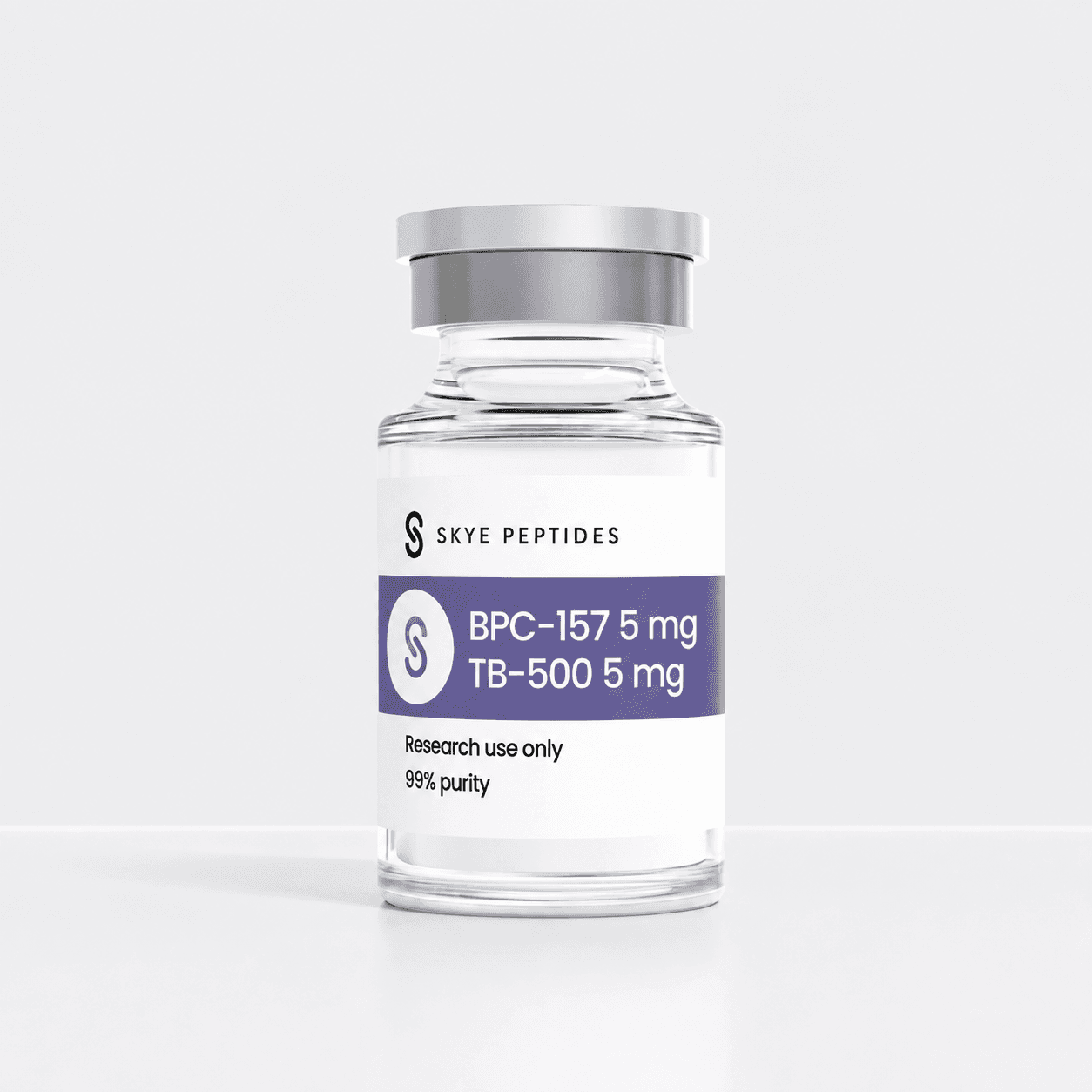
TB-500
A synthetic analog of thymosin beta-4
TB-500 is a synthetic analog of the active N-terminal fragment of thymosin beta-4, a 43-amino-acid protein present in nearly every tissue in the body. It retains the key domain responsible for actin binding.
What's studied
The main described mechanism is binding to G-actin and preventing its polymerization into F-actin, which creates a mobilizable actin reserve and eases cytoskeletal reorganization in cells. Research links this to keratinocyte and endothelial cell migration during wound healing — both local and systemic. A 2025 review (MDPI, Applied Sciences) summarizes data on thymosin beta-4 and TB-500 in the context of tissue and musculoskeletal recovery.
Difference from BPC-157
TB-500 is described as acting more systemically (due to the fragment's mobility), while BPC-157 is more often linked to local effects at the injury site through vascular mechanisms. For that reason, research protocols often treat them as complementary — details in the blog post "BPC-157 vs TB-500: What's the Difference."
Questions about TB-500
Is TB-500 the same as thymosin beta-4?
No, it's a synthetic fragment of the full-length thymosin beta-4 protein (43 amino acids) that retains its active, actin-binding region.
Is there human research?
Most of the data on TB-500 as a distinct synthetic fragment comes from cell and animal models. For full-length thymosin beta-4, the body of data — including topical wound-healing formulations — is broader.
Exact prices, dosages, and availability are in the Telegram catalog.
Open in Telegram