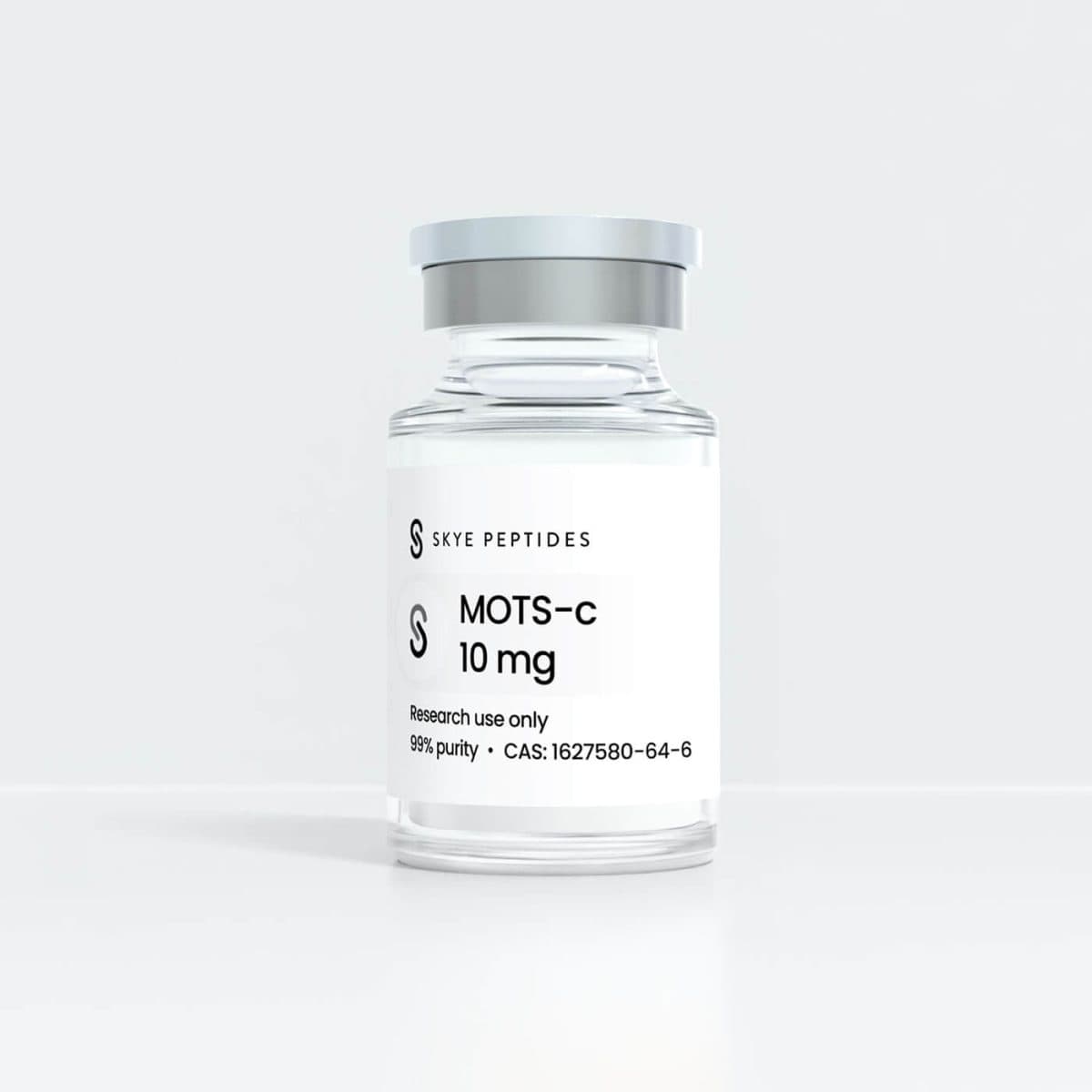
MOTS-c
A mitochondrial-derived peptide for metabolic and performance protocols
MOTS-c is a peptide encoded by mitochondrial DNA (the 12S rRNA region). One of the few peptides in the catalog with a described link between endogenous production and physical activity in humans.
What's studied
In mouse studies, MOTS-c regulates AMPK signaling and nucleotide, glucose, and fatty-acid metabolism; administering MOTS-c prevented high-fat-diet-induced weight gain and insulin resistance in animals. MOTS-c levels in muscle and plasma have been observed to decline with age, while physical activity in humans raises its level in muscle tissue and blood.
Limits of the data
The link between endogenous MOTS-c and physical activity is described in humans, but data on administering exogenous MOTS-c comes mainly from animal models — these are different levels of evidence and shouldn't be conflated.
Questions about MOTS-c
Is MOTS-c really produced by the body on its own?
Yes, this sets it apart from many other peptides in the catalog — MOTS-c is encoded by mitochondrial DNA and occurs naturally in human tissue and bloodstream, with its level rising during physical activity.
Is that the same as taking MOTS-c externally?
No — observations of endogenous MOTS-c in humans and data on administering the exogenous peptide (mostly from animal models) are sources with different levels of evidence, and shouldn't be conflated.
Exact prices, dosages, and availability are in the Telegram catalog.
Open in Telegram