CJC-1295
A long-acting growth hormone releasing factor
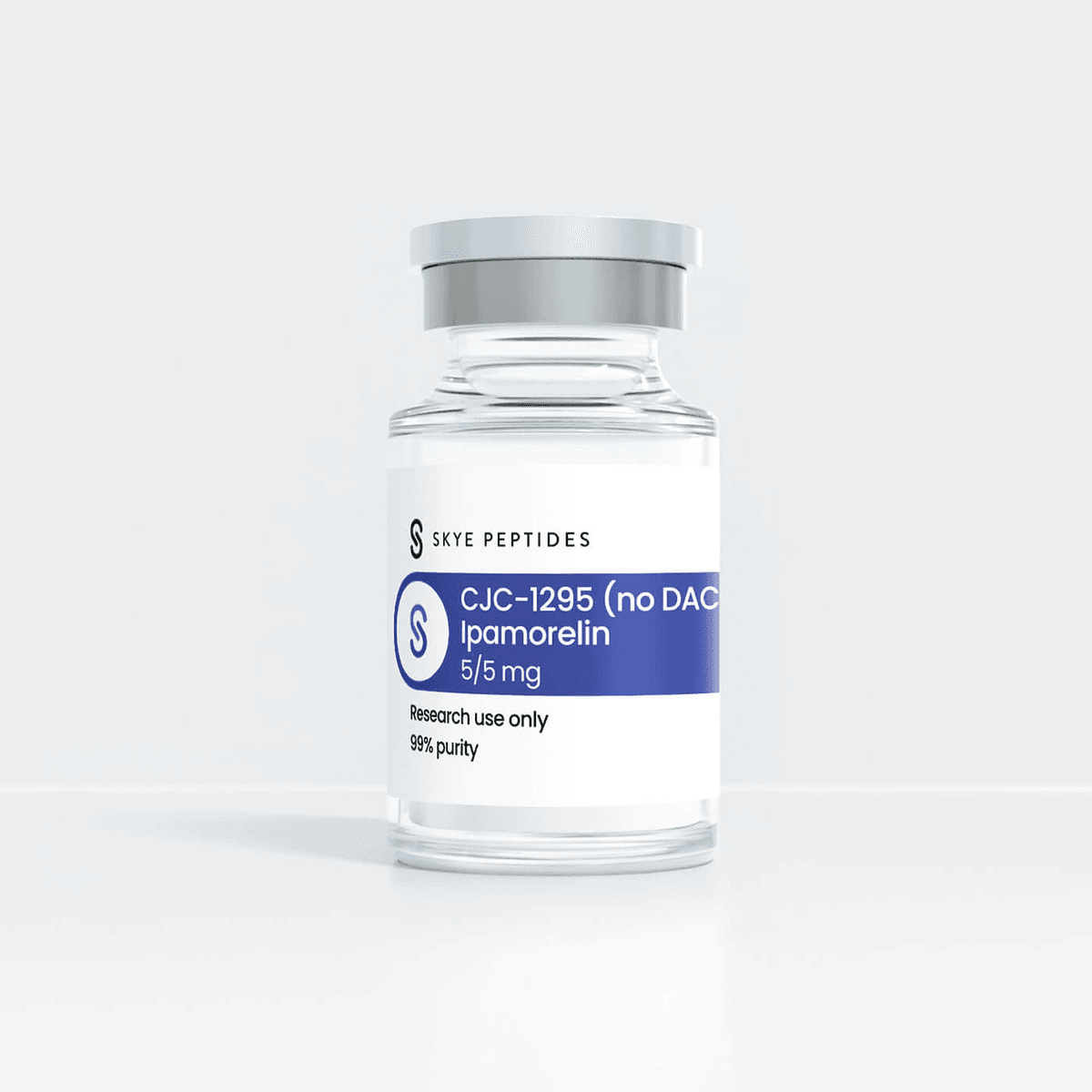
CJC-1295 is a synthetic, long-acting analog of growth hormone-releasing hormone (GHRH). In research protocols it's most often discussed alongside growth hormone secretagogues such as Ipamorelin.
What's studied
CJC-1295 binds the GHRH receptor on the pituitary, stimulating production and release of endogenous growth hormone. Compared to natural GHRH, the molecule's modification is aimed at extending its half-life — discussed in the literature as its main distinction from earlier, short-lived analogs.
Pairing with Ipamorelin
CJC-1295 and Ipamorelin act on different receptor pathways of the same process — growth hormone secretion: the former through the GHRH receptor, the latter through the ghrelin receptor (GHS-R). That's why they're often discussed as a pair in the research literature — more detail in the Ipamorelin page.
Questions about CJC-1295
What's the difference between CJC-1295 and Ipamorelin?
They act at different points: CJC-1295 works through the GHRH receptor, Ipamorelin through the ghrelin receptor (GHS-R). Both ultimately affect growth hormone secretion, but via different pathways.
What does "long-acting" mean?
The modification to the CJC-1295 molecule extends its half-life compared to natural GHRH — discussed in the research literature as its key distinction from earlier analogs.
Exact prices, dosages, and availability are in the Telegram catalog.
Open in Telegram